
The energy of love has the capacity to heal our
bodies when conditions are appropriate. On the physical
level, because of the prevailing positive mental
state, physical illnesses often resolve themselves. Some
diseases automatically heal without any particular
attention being paid to them, and those that still
remain usually respond to consciousness techniques.
Persistent illnesses that are unresponsive to treatment
are viewed as karmically, symbolically, or spiritually
significant. Overall, there is a decreasing awareness of
the body, which now goes about its business and
seems to take care of itself on its own. We are no
longer identified as a body. There is a loss of interest
in dealing with health matters on a purely physical
level, and there are times when awareness of the body
disappears altogether, unless we focus on it for some
particular reason.
Category: Thoughts & quotes from Sir David R. Hawkins, M.D., Ph.D. & Susan Hawkins
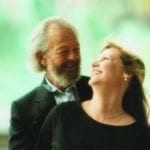
Hello, we want to share thoughts and quotes from Dr. David R. Hawkins and his wife, Susan Hawkins. We will keep you informed of upcoming events, as well. For available books, CDs, DVDs, and the Map of Consciousness, visit the Dr. David R. Hawkins product page. Find a Dr. Hawkins Study Group in your area.
Dedicate one’s actions
Meaning is defined by context, which determines motive. It is the motive that establishes spiritual value. To dedicate one’s actions as a service of love to life is to sanctify them and transform them from self-seeking motives to unselfish gifts. We define excellence as dedication to the highest standards. Every act can then be held as an opportunity to glorify God by sheer purity of endeavor. All physical tasks and labor can be ingredients in one’s contribution to the world. Even the smallest task can be seen as serving the common good, and if viewed in that light, work becomes ennobled.
How life is contextualized can bring either joy or resentment. Begrudging is replaced by generosity. If others benefit from one’s efforts, so much the better. Everyone has the opportunity to contribute to harmony and beauty by kindness to others and thereby support the human spirit. That which is freely given to life flows back to us because we are equally part of that life. Like ripples on the water, every gift returns to the giver. What we affirm in others, we actually affirm in ourselves.
It’s the opposite to the way the world sees it…
“… love leads to the capacity for reverence for that which is intrinsic and innate within the spirit of ones’ partner. … Is romance based on first an illusion and then the illusion wears off?
… it is opposite to the way the world sees it. …when you first see that person and flash on them, that’s reality. …Then as time goes on the ego raises its ugly head and starts to demean it. But in the beginning you saw who they really were, their incredible perfection and beauty…”
from God: Transcendent & Immanent Lecture 11/02
God is the very essence of subjectivity
The substrate of all existence and creation is the state of subjectivity. God is the very essence of subjectivity. What is aware of existence is the awareness of the presence of God within us. With this realization, we resolve the spiritual conundrum of that which is seeking is that which is sought; in essence, it is the subjective searching for the subjective. The illusion that there is a dualistic set of opposites called subjective versus objective dissolves. It is the ultimate human paradox that man’s dependence on perception precludes his being able to know his own identity.
from The Eye of the I, ch. 15, pg. 289
The Obstacles to Love
The consciousness levels of Love formally calibrate from 500 and above, and by level 570, they are often considered to be saintly by virtue of unconditionality. The energy field recontextualizes all experience and relatedness to self, others, and to all life.
The obstacles to Unconditional Love (cal. 540) are attachment, resentment, specialness, and judgmentalism. The power of the high energy of Unconditional Love is transformative to self and others and precipitates the appearance of the miraculous by which the seemingly impossible is transformed into the actual. The energy of Love is complete within itself and is thus free of need, considerations, limitations, or seeking of gain. To be free of wantingness is liberating, and in some spiritual traditions, Enlightenment is termed ‘Liberation’(Moksha). In Christianity, the dissolving of the personal self into the Self of Divine Love is referred to as Unio Mystica.
from Reality, Spirituality, and Modern Man, Ch. 14, pg. 287-288